
Madison Garey
January 19, 2024
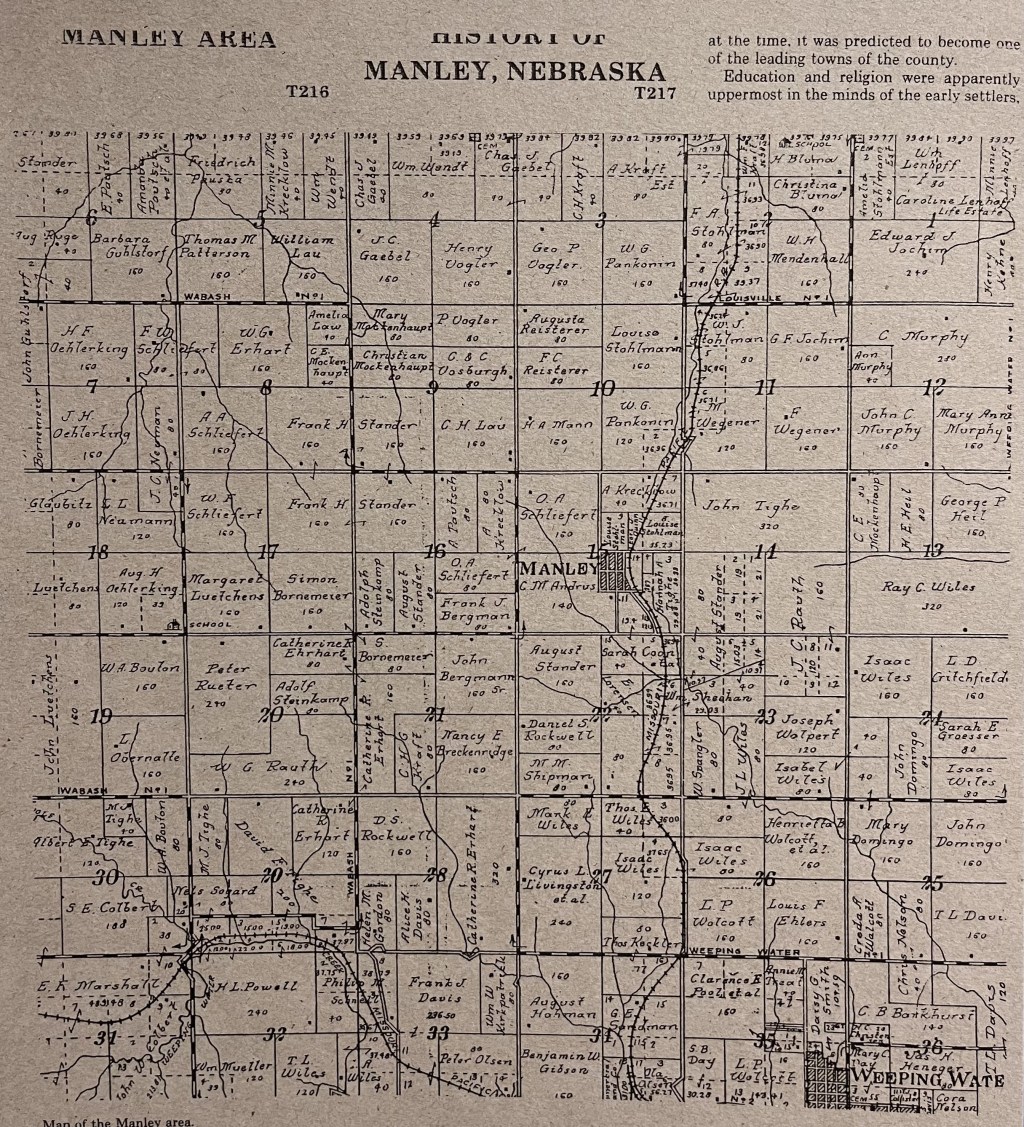
The Village of Manley is located just north of the geographical center of Cass county. Locals lovingly refer to the small village as the Heart of Cass County. In fact, it’s nearness to the center of the county and the breath taking views from the highest point of the village, originally had been named “Summit”.
August Wendt, German born and raised, headed to the United states with the idea of living the American dream. To him, life in America had its citizens living lives of luxury: “where every man was a king and every woman a queen.” After landing in New York, he settled with his wife and two children on a farm near Cedar Creek.
The land, to become Manley, changed hands several times between the early settlers from 1855 to Wendt’s purchase of the 160 acres in 1880. It was in 1883 that Mr. Wendt dedicated the sight of Manley’s “streets and alleys for the use and convenience of the public so long as occupied.”
Manley owes its existence to the Missouri Pacific Railroad, which built its main line from Atchison, KS, to Omaha in 1881-82. This line traversed Cass County south-to-north coming through Avoca, Weeping Water, Manley, and on to Louisville.
Mr. Wendt had Manley platted and surveyed in 1883 with the plat being filed for record on June 6, 1883 to the Cass County Register of Deeds. The Manley post office was established two days prior on June 4, 1883. The first meeting of The Village Board of Trustees occurred May 13, 1945. Though citizens were stepping up into leadership positions, creating ordinances and making life easier for those residing in the area, Manley was not incorporated until April 6, 1954.
Manley was described as a “flourishing town” on the rail line. At its peak, over 30 businesses were booming. By 1983, that number was down to six businesses at most. In its hay-day, Manley hosted merchandise and grocery stores, blacksmith, barber shop, creamery, confectionery, auto sales, attorney, billard parlor, hardware store, wagon maker, lumberyard, dress maker, millinery shop, harness shop, assessors, doctor, bank, filling station, slates men, cages, Manley Ice Co. and a tavern. One of the few remaining downtown businesses, the local bar, closed in 2022.
Though few hard standing businesses remain in Manley, current residents own several home based businesses keeping the village heart beating. Metal working, health and wellness services, news/media services, and food producers all have thriving businesses in the village.
St. Patrick’s Catholic Church was established in 1881. Its first structure was destroyed by lightning, with a second building — made from brick — serving the parish until 1978. The cornerstone was laid September 17, 1978 for the third and final structure. The church was completed in time for the churches centennial in 1981.
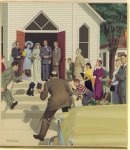
The “little white church” on Broadway Street, famously painted by Glen Fleischmann (1909-1985), was established in 1888. By 1982 the Manley Methodist and Community Church was deemed condemned, and was demolished along with the hotel that existed in Manley.

School district 96 was formed in Manley in 1888. The school house was constructed in 1931. Today, students attend in Louisville, Murdock, or Weeping Water for public school. During the surge of homeschooling post COVID (2020-2024) a private homeschool co-op opened serving as many students as the public school had in its prime. The group pays homage the traditional title calling themselves “Manley Mustangs.”
Manley’s main street developed much as other railroad towns. The telephone exchange at Weeping Water and Louisville served Manley from 1915 until 1957, when all phones in town became part of the Louisville exchange. Although electricity came to Manley in 1927, street lights were not installed until November 11, 1954. On that day a large crowd gathered to enjoy a pancake and sausage feed sponsored by area merchants to celebrate the occasion.
Manley’s location east of Highway 50 placed it at a disadvantage. With the highway simply bypassing Manley and no direct access, as the railroad faded, so too did Manley. Work on a spur road from the highway into downtown began in 1961, and the streets were blacktopped in 1970.
The population of Manley has changed throughout time, but never overwhelmingly. At its peak in 1940 the population reached 249. In 1980 there were only 124 Manley residents. The 1990 census shows a population increase to 170. For the last 30 years the population has remained stable. According to the 2020 census, 167 citizens call Manley home. Citizens enjoy the small town life and ease of access to the larger cities of Lincoln and Omaha all within a 40 minute drive.
A number of famous people claim Manley as their home:
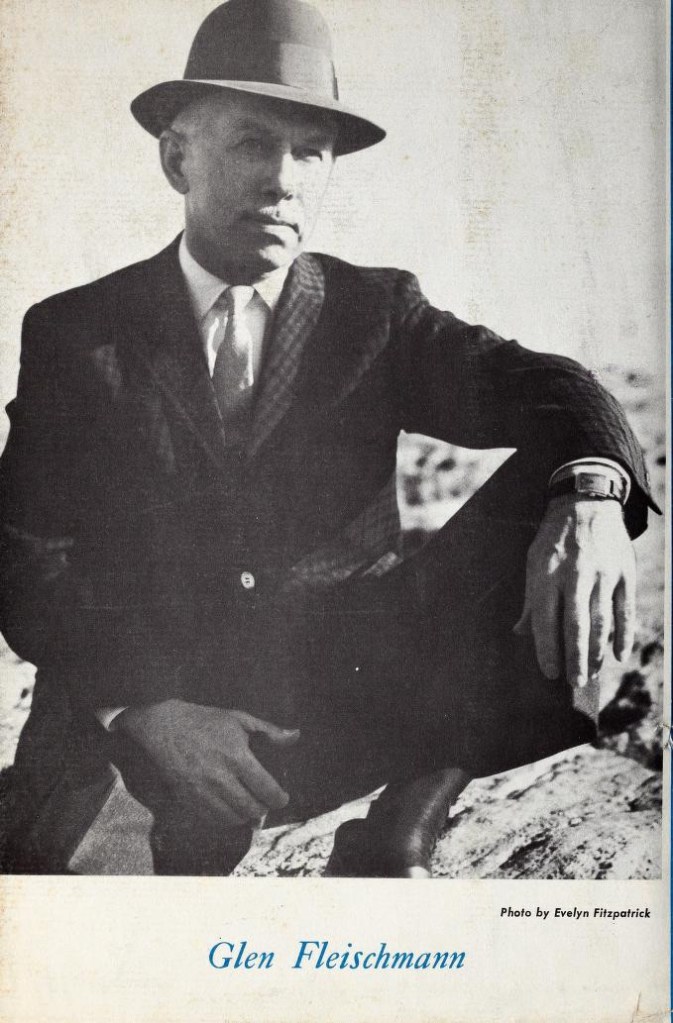
— Glen Fleischmann (1909-85), artist and author, was born and raised in Manley, son of Frederick and Sarah Taylor Fleischmann. He graduated from Louisville High in 1926, and became a prominent illustrator for national magazines including Saturday Evening Post, Good Housekeeping, Collier’s, and Woman’s Home Companion. Fleischmann wrote While Rivers Flow in 1963, The Cherokee Removal in 1971, and The Artist: His Markets and World in 1971.
— Sophus Keith Winther (1893-1983) a noted writer, was born in Denmark to Anton and Sena Winther, but grew up and attended schools in Manley and Weeping Water. He was Professor of History at the University of Washington and the author of the trilogy: Take All to Nebraska, Mortgage Your Heart, and This Passion Never Dies.
— Oscar Winther, a younger brother, also attended school at Manley. He became Professor of History at Stanford University and Associate Dean of Students at Indiana University. Oscar was the author of many history books and edited a number of journals.
A special landmark in the area is the beautiful Schliefert Iris Gardens one mile northwest of Manley, started by Arnold and Esther Schliefert in 1935. Another landmark one mile southwest of town, the Hi Vu Restaurant, has been a thriving truck stop for the past 25 years.
Sources
Centennial History of Manley, 1983
Don Hill, Cass County Historical Society, 646 Main Street, Plattsmouth, NE 68048 plus Irene Puls, great-granddaughter of August Wendt.
Manley History Committee, 1983
 Manley News